Spider-Man: Brand New Day Review: The Metamorphosis of Peter Parker
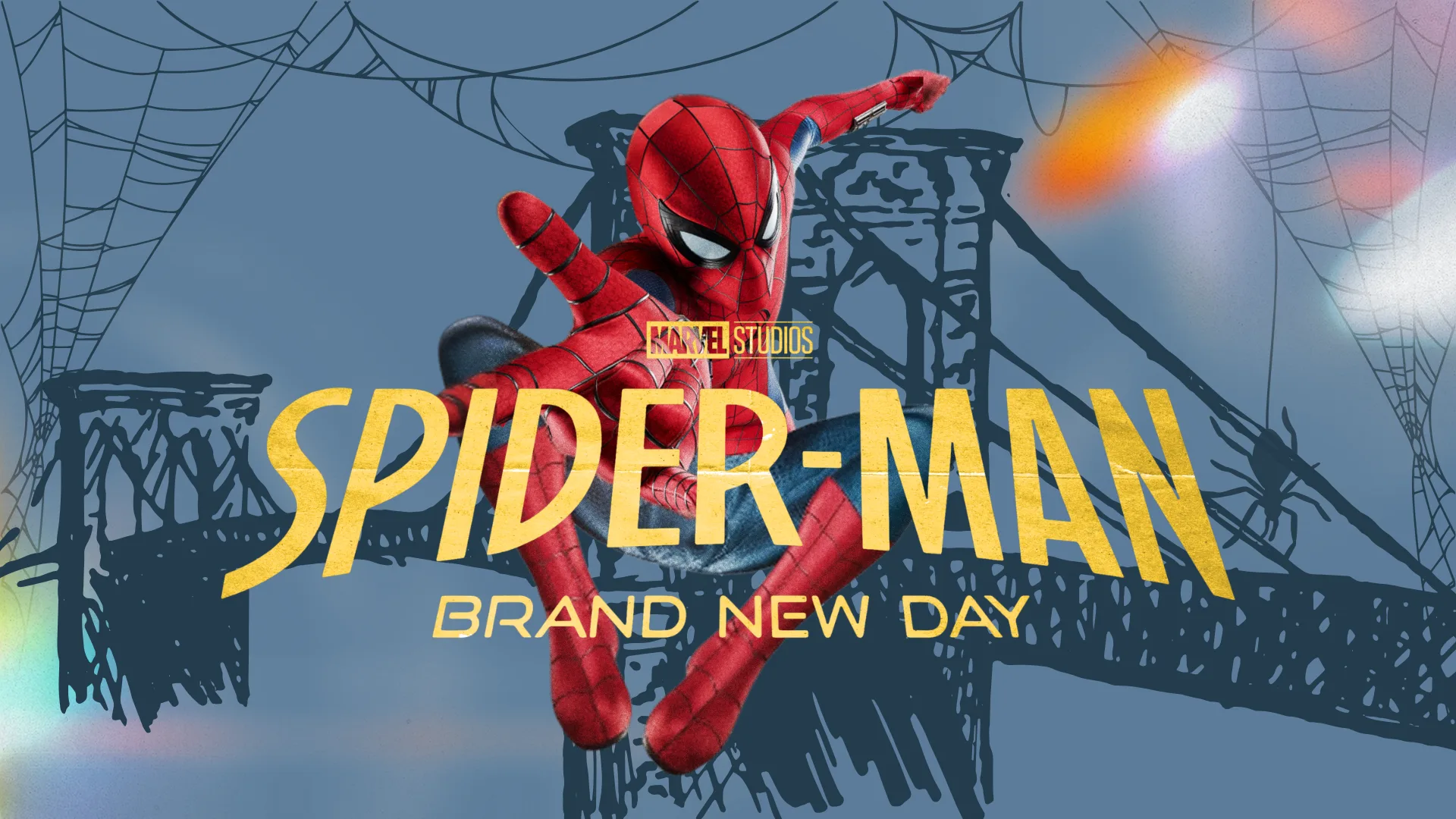
What is the benchmark for a great Spider-Man film?
The answer, inevitably, is Sam Raimi’s Spider-Man 2. Released in 2004, it has become a pop culture classic and remains among my most cherished films, superhero or otherwise: emotionally direct, formally elegant and almost mythic in the simplicity of its dramatic construction. It understands Spider-Man not just as a set of powers, a costume or even a particular relationship with New York City, but as a choice Peter Parker must make again and again.
That’s what makes Spider-Man 2 work. It’s not primarily that it takes place on the streets of New York, though that helps. It’s not that Spider-Man swings with convincing gravity and momentum, though that’s always exhilarating. It’s that the film is about Peter, responsibility and the recurring decision to put that responsibility before the life he wants—even, and especially, when doing so hurts.
Naturally, Spider-Man: Brand New Day had enormous boots to fill. Its decidedly public production and gigantic global marketing campaign promised a much-awaited return to the franchise’s more grounded, less multiversal roots. After the scale and accumulated continuity of 2021’s No Way Home, there was understandable excitement around the prospect of a smaller Spider-Man story: Peter alone again, living in the city, trying to hold together an ordinary life while answering the demands of an extraordinary one.
But simply shrinking the scale wouldn’t have been enough. “Grounded” has become one of the most overused words in modern franchise filmmaking, often reduced to dim lighting, street-level villains and less conspicuous CGI. What makes Brand New Day work is that its grounding isn’t merely geographical or aesthetic. It’s moral and emotional, even philosophical.
This is a film about Peter Parker choosing to be Spider-Man, but also learning that choosing Spider-Man doesn’t require extinguishing Peter Parker.
Responsibility isn’t a lesson Peter learns once and permanently completes. He has to choose it repeatedly, in ordinary moments and catastrophic ones, when the decision feels noble and when it feels lonely, thankless or actively self-destructive. The film understands that becoming Spider-Man isn’t a single rite of passage. It’s a discipline: the continuing act of accepting that having the power to help doesn’t guarantee recognition, happiness or even certainty that the sacrifice will mean anything.
But Peter’s problem in Brand New Day isn’t that he’s failed to learn sacrifice. If anything, he’s learned it too completely.
Peter Parker After No Way Home
After No Way Home, Peter has transformed responsibility into an excuse for isolation. He has concluded that loving people means protecting them from himself, even if that requires withholding the truth, making their decisions for them and disappearing from their lives. It initially resembles the purest possible expression of selfless heroism. Peter accepts the loss, asks for nothing and continues helping people who may never know what he surrendered for them.
Yet Brand New Day gradually exposes this as an incomplete and ultimately destructive understanding of what it means to be Spider-Man. Peter has confused responsibility with self-erasure. He has mistaken loneliness for moral clarity.
That understanding gives Brand New Day a reason to exist beyond being another installment in the franchise or another opportunity to display Spider-Man within the machinery of the wider Marvel Cinematic Universe. The film feels organic. It grows out of what came before, but it’s not beholden to making continuity itself the attraction. Previous events are treated as Peter’s lived memories rather than pieces of brand IP being repositioned for audience applause.
This is especially impressive because Brand New Day doesn’t reject the earlier MCU Spider-Man films. It depends on them profoundly. Their relationships, losses and consequences remain embedded in Peter, even as the new film adopts an aesthetic and dramatic language markedly different from the Watts trilogy.
In doing so, it achieves something I hadn’t thought entirely possible: it retroactively changes what those films mean.
Becoming Spider-Man
In retrospect, the previous trilogy can now be understood as a prolonged story of Peter becoming Spider-Man. He had the powers. He wore the suit. He fought alongside the Avengers and helped save the universe. But his life remained supported by friends, mentors, inherited technology and an interconnected heroic world that often softened the traditional tension between Peter Parker and Spider-Man.
Before Brand New Day, saying that this version of Peter hadn’t fully become Spider-Man could sound like an external criticism of the earlier films, or essentially a complaint about what they had failed to provide. After Brand New Day, it can be read as the intended shape of his development. The new film makes the earlier trilogy feel like a prehistory without diminishing its importance. Everything mattered. It simply hadn’t reached its final meaning yet.
That’s a difficult tonal reconciliation, and the film manages it with remarkable confidence.
Cretton’s Spider-Man
From its opening movements, Brand New Day feels tactile in a way Marvel films have rarely attempted in recent years. There’s weight to the world and to Spider-Man’s movement through it. The practical suits take center stage here, as does the emphasis on physical swinging and action that understands Spider-Man as a body moving through space rather than a digital figure simply traversing it. Holland rises to that physicality with a noticeably more mature performance, carrying himself like a Spider-Man who has finally grown into both the burden and the capability of the role.
The action itself is unusually inspired, frequently evoking the dynamism of comic panels and the expressive movement of the games without simply reproducing either. The city feels inhabited, occasionally abrasive and capable of continuing with or without Peter. The film itself can be gritty without mistaking bleakness for maturity, stylish without becoming mannered and emotionally expressive without sacrificing restraint.
Its visual identity helps. Brand New Day occasionally leans into stark, high-contrast color in ways that feel closer to an indie film than to the flattened neutrality that has defined too much modern franchise imagery. It gives parts of the film an almost heightened intimacy: expressive without becoming artificial, stylized without losing the tactile quality that anchors the rest of it.
There’s also something refreshingly old-fashioned about its sensibility. I mean that entirely as a compliment.
The film believes in clear dramatic stakes, earnest feeling and the accumulation of character decisions. It allows heroism to be sincere. It doesn’t constantly protect itself from emotion through irony, nor does it behave as though the existence of previous Spider-Man films makes classical Spider-Man ideas embarrassing or obsolete. It understands that familiar material can still feel vital when approached with conviction and specificity.
At the same time, Brand New Day is far from a nostalgic imitation of Raimi. It doesn’t attempt to recreate the exact tone, visual grammar or melodramatic rhythms of Spider-Man 2. Its achievement is more difficult than mimicry. It recovers the underlying sensibility that made that film enduring: the belief that the spectacle matters because of the person inside it. It then expresses that belief in a form appropriate to this Peter Parker and the history he carries.
The result is triumphant, edgy, tactile, poignant and frequently surprising. It’s perhaps the most tasteful modern Spider-Man film in the way it handles both its emotional and franchise material. Its moments of catharsis feel earned because the film understands when not to reach for them prematurely. It builds patiently, trusts the audience to follow Peter’s interior journey and resists the temptation to turn every significant beat into an announcement of its own significance.
That restraint is most evident in the third act.
Contemporary superhero films often treat their conclusions as exercises in compulsory escalation. The screen becomes busier, the geography less coherent and the emotional conflict increasingly abstracted into scale. Brand New Day has opportunities to surrender to that instinct, but largely refuses. The high-stakes action is still there, but it functions more like a release valve than the point of the climax. The film keeps returning its attention to Peter, to what is happening inside him and to the choice he is being forced to make about himself.
The third-act action is exciting, but excitement isn’t the film’s final objective. Its greater concern is what Peter is willing to do, what doing it will cost him and who he will be after the immediate danger has passed. The film understands that the most consequential victory available to Spider-Man may not look like a victory from Peter’s perspective.
There are moments when it drifts visually and stylistically back toward the familiar Marvel house style. A few images and transitions feel less textured, less distinctive and more beholden to the broader MCU language than the rest of the film. They stand out precisely because director Destin Daniel Cretton’s overall vision is so cohesive. Yet the film repeatedly corrects its course, resisting those instincts in favor of something more deliberate and dramatically grounded.
The Mutation
The film’s primary antagonist, apart from its fresh if somewhat underused rogues’ gallery, isn’t a conventional marquee villain hidden beneath prosthetics or CGI. It’s an initially unseen force that follows Peter through the people he saves, fights, knows and loves. That gives the story a distinctive narrative and psychological edge, and the film mostly refuses to squander it, even with the future of the wider MCU breathing down its neck.
The Spider Within
More importantly, the threat isn’t merely something Peter must defeat. It literalizes the division within him.
As the mutation advances, Peter increasingly gives himself over to instincts that are recognizably arachnid: isolation, territoriality and the rejection of attachment. A typical spider is solitary, and the mutation amplifies that nature within him. The more Peter withdraws from the people he loves and suppresses the part of himself that needs them, the stronger those instincts become.
His physical destabilization is therefore inseparable from his emotional and philosophical crisis. Peter has divided himself into two competing identities: Spider-Man, whom he understands as duty, power and sacrifice, and Peter, whom he increasingly treats as a source of weakness, longing and dangerous attachment. The more completely he tries to become Spider-Man at Peter’s expense, the less stable either identity becomes.
He Is Both
That’s why the people Peter allows back into his life matter so much.
Frank, MJ, Ned and, in a more bounded sense, Jean DeWolff each challenge his belief that he alone should determine what risks others are allowed to take for him. Peter has spent so long making unilateral sacrifices on behalf of the people he loves that he has failed to recognize the quiet arrogance within them. Protecting someone by denying them the truth also denies them the right to choose.
The people Peter loves deserve agency over the danger that comes with knowing him. They deserve the choice to stay, to help and to decide whether loving him is worth the risk, just as Peter repeatedly decides that helping strangers is worth whatever it may cost him.
Letting people in is therefore not a retreat from responsibility but a more mature expression of it.
Peter doesn’t stabilize his mutation by defeating or suppressing the spider within him. Nor can he abandon Spider-Man and retreat into the possibility of an ordinary life. He succeeds only when he integrates the two sides of himself: when he accepts Spider-Man’s responsibility without treating Peter’s humanity as a defect to be overcome.
His capacity for love, trust and attachment is what keeps Spider-Man human. And eventually, his willingness to be known, helped and loved is what finally allows him to reach the height of his powers.
When Peter lets others in again, he’s not only reclaiming his relationships. He’s allowing himself to breathe.
The Best Since Spider-Man 2
Taken together, the film’s minor imperfections keep it, by the narrowest margin, below Spider-Man 2 for me. Raimi’s film possesses an almost impossibly pure structural, narrative and thematic simplicity. Every element seems organized around the same question: can Peter accept the cost of being Spider-Man? Its clarity is elemental.
Brand New Day carries considerably more history. It has to negotiate previous films, an enormous shared universe and a version of Peter whose development occurred across multiple tones and scales. It is therefore less pure by design. But the fact that it can carry all of that history without collapsing beneath it may be its own kind of miracle.
Spider-Man: Brand New Day is the best Spider-Man film since Spider-Man 2.
More importantly, it’s the film that finally makes this Peter Parker feel complete, and not because he has arrived at a permanent or definitive version of himself, but because he has rejected the false choice between his two identities.
Spider-Man is not the reward waiting at the end of Peter’s development. He’s the choice Peter must continue making. But that choice doesn’t require Peter to disappear.
That choice remains painful and dangerous. It may never give Peter the life he deserves. And, because such is Spider-Man, he may one day convince himself again that isolation is the only responsible path.
But for now, Peter understands that he doesn’t have to do it alone.
Because Peter Parker is Spider-Man. And Spider-Man is Peter Parker.
He is both.